20130223-205217.jpg

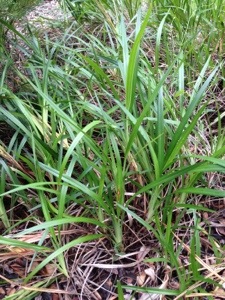
D is for Dianella longifolia

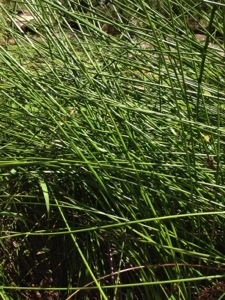
D is for dianella longifolia, aka pale flax lily…
This plant has a strong linear fibre in its dark green strappy leaves, which dry to an olive green colour. It’s great for contrast in an exposed core coil weave.

D is also for dendrocnide excelsa, aka giant stinging tree, which yields amazing inner bark for cordage, string bags and fishing nets as well as a number if other uses – but watch out for the leaves!!!

20130223-205217.jpg

C is for cordyline australis

This cordyline has leaves that are amazingly strong – they can be easily split with a fingernail or needle and used as thread in a coil weave, or as a core fibre. The flatness of the leaves are conducive to flat weave experiments, but I can’t say I’ve tried that yet. Even though the fibre is strong enough to use when green, it’s best to dry the fibre -out of the elements – and then soak it overnight and wrap it in a damp towel before using. I love the linear strength of this fibre…
And yes it’s called cordyline Australis, but no, it’s not native to Australia. It’s from New Zealand. Figure that.

20130216-202322.jpg

B is for Baumea rubiginosa

B is for Baumea rubiginosa. It’s worth repeating the heading because in my book, this is a superb fibre to work with. A long, dark green, round reed with a pointed tip and a pinky purple tinge to the base of the stem, this plant is strong, soft, flexible and beautiful. It’s a traditional Indigenous fibre which, according to recorded texts and remaining artifacts (dillies etc), was used mainly on Stradbroke Island and less frequently on the mainland from Richmond river of NSW to the Gympie area.
The fibre was plucked, drawn over hot coals, and a few days later, twined into cordage, coiled into baskets or looped into dilly bags. And thus the knowledge continues…

20130216-202322.jpg

20130216-202548.jpg

B is also for Brachychiton, Baloskion pallens, Burney vine, Beaucarnea recurvata and Banana… later.

20130216-191512.jpg

A is for Acacia Melanoxylon

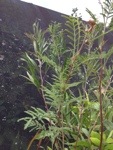
Am I really starting this blog with acacia melanoxylon? It just popped into my head. Well more than that, really… I took some photos of it today at Fairhill native plant nursery. It’s commonly known as black wattle, or Australian blackwood, and is a very common pioneer plant. Grows like a weed (it’s actually on the global invasive species list)… And recently I read that the bark was traditionally used for making string and for fishing lines… So I’m starting my blog with a fibre I haven’t actually tested out yet, starting with an item of hearsay, as such. Going on printed information. Oh well, so be it. Acacia Melanoxylon. If I were to take an educated guess, I would suggest that the bark is best peeled off an immature shoot or sapling, as generally the young parts yield the best fibre for string and net-making. My next enquiry would be whether the inner bark could be separated from the outer, as can be done with the cotton tree bark, or not. The inner bark is often finer, less rough, and beautiful. But since I haven’t tested it yet, it’s just a guess.
Here’s a photo of it –
20130216-191512.jpg

Ok, it’s a terrible photo too, but just wait, I have some magnificent ones in the pipeline…!

A is also for Alexandra palm, Archontophoenix cunninghamii, Araucaria heterophyllis, Aristolochiacea and Anigozanthos, but not… yet.

SCC Logo

An A-Z of weaving plant fibres

Plant fibres are amazing things, especially when you can use them to weave! So I have decided to go on a journey to discover which of these particular fibres grow in our gardens around the Sunshine Coast. The local Sunshine Coast Council has come to the party too, by granting me a RADF grant to complete the project…yay!!!
What will follow here is an outcome of this project – a blog about plants I’ve encountered in my search for weaving fibres… an A-Z of suitable (and possibly not too suitable fibres) as I pull, twist, shred and coil my way around the coast. As I commune with nature and uncover her weaving secrets… keep tuned…. A is on its way!!!